Illustrative example. This is a practice engagement built on sample data to show how we work. It is not a real client, and all figures are illustrative.
The business
A regional landscaping and hardscape contractor on our Growth Partner retainer, with three revenue lines: hardscape installation, landscape maintenance, and irrigation and seasonal services. Each month we compare results to budget and walk the owners through what moved.
What August looked like at a glance
+8.8%
Revenue vs. budget
35.7%
Gross margin, vs. 42.0% budget
−$7,835
Operating income vs. budget
+29%
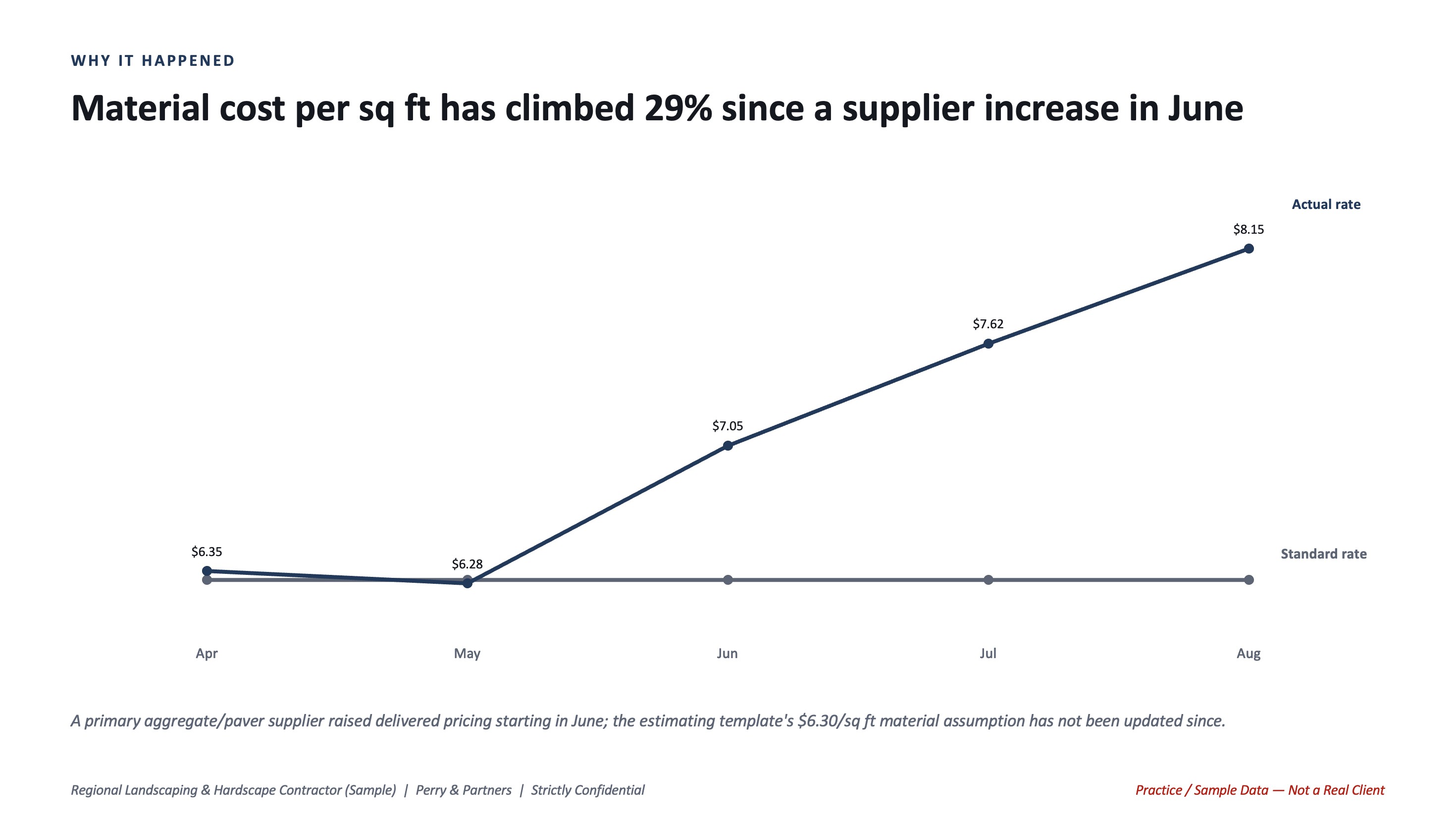
Material cost per sq ft vs. standard
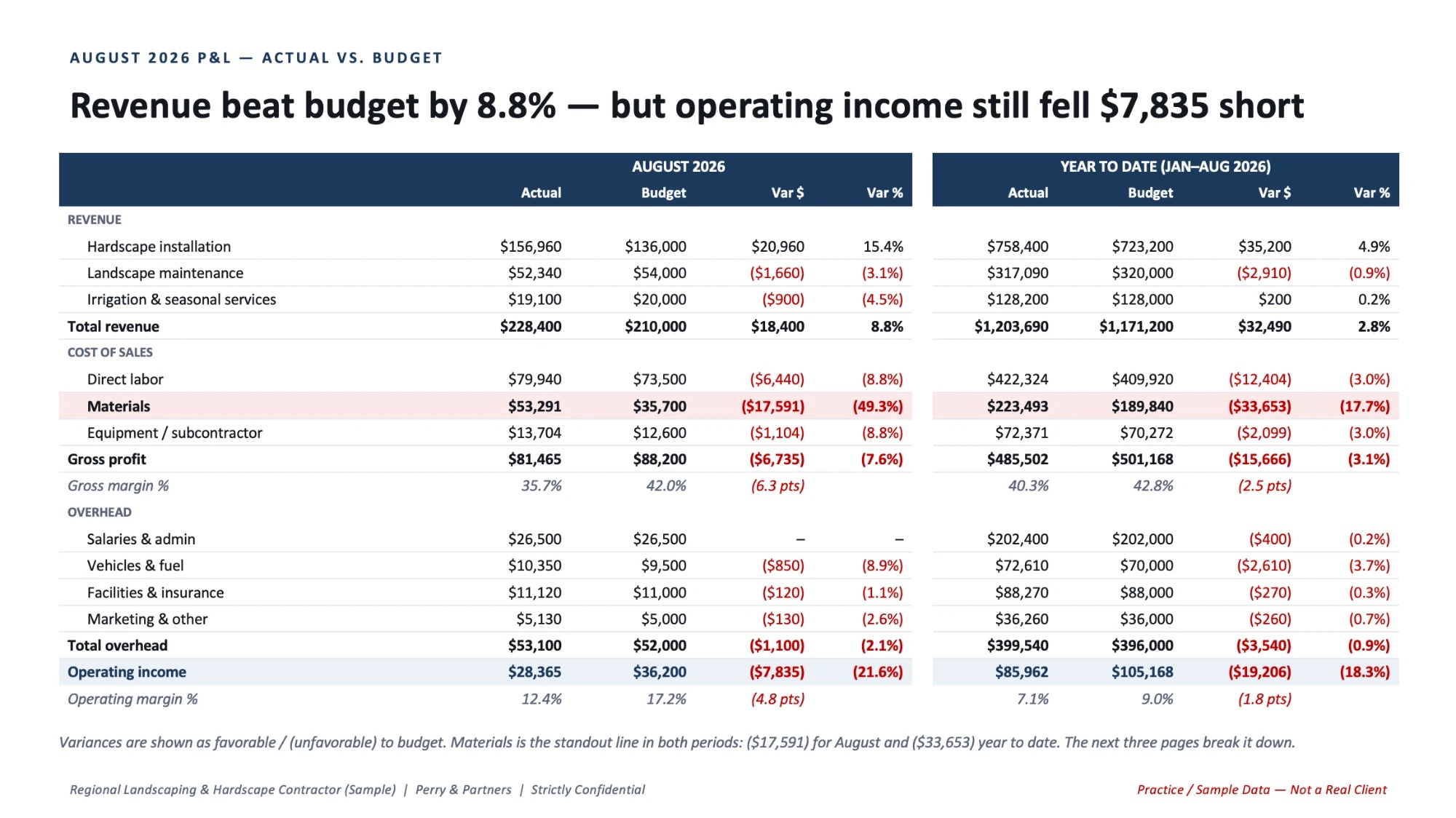
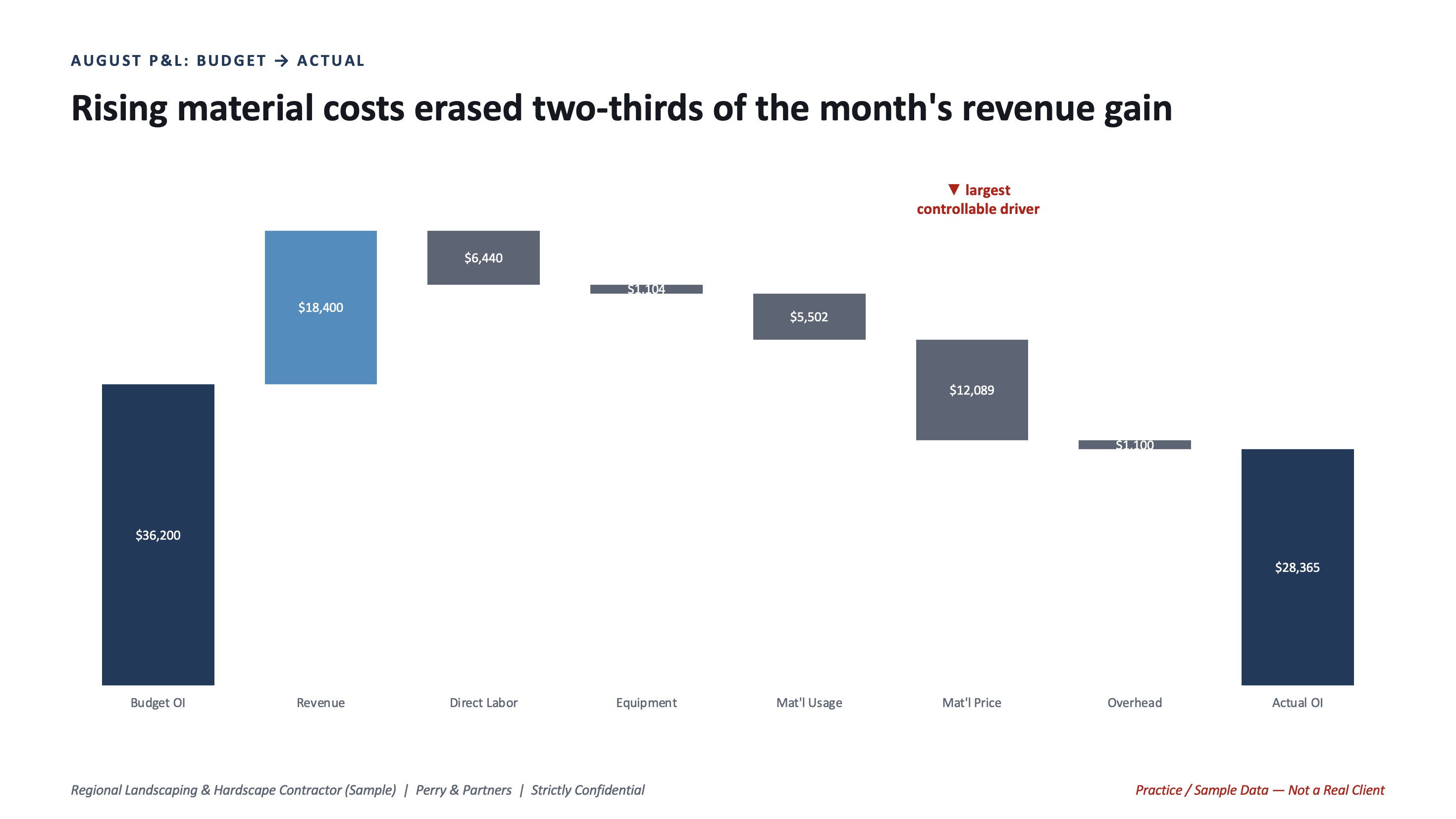
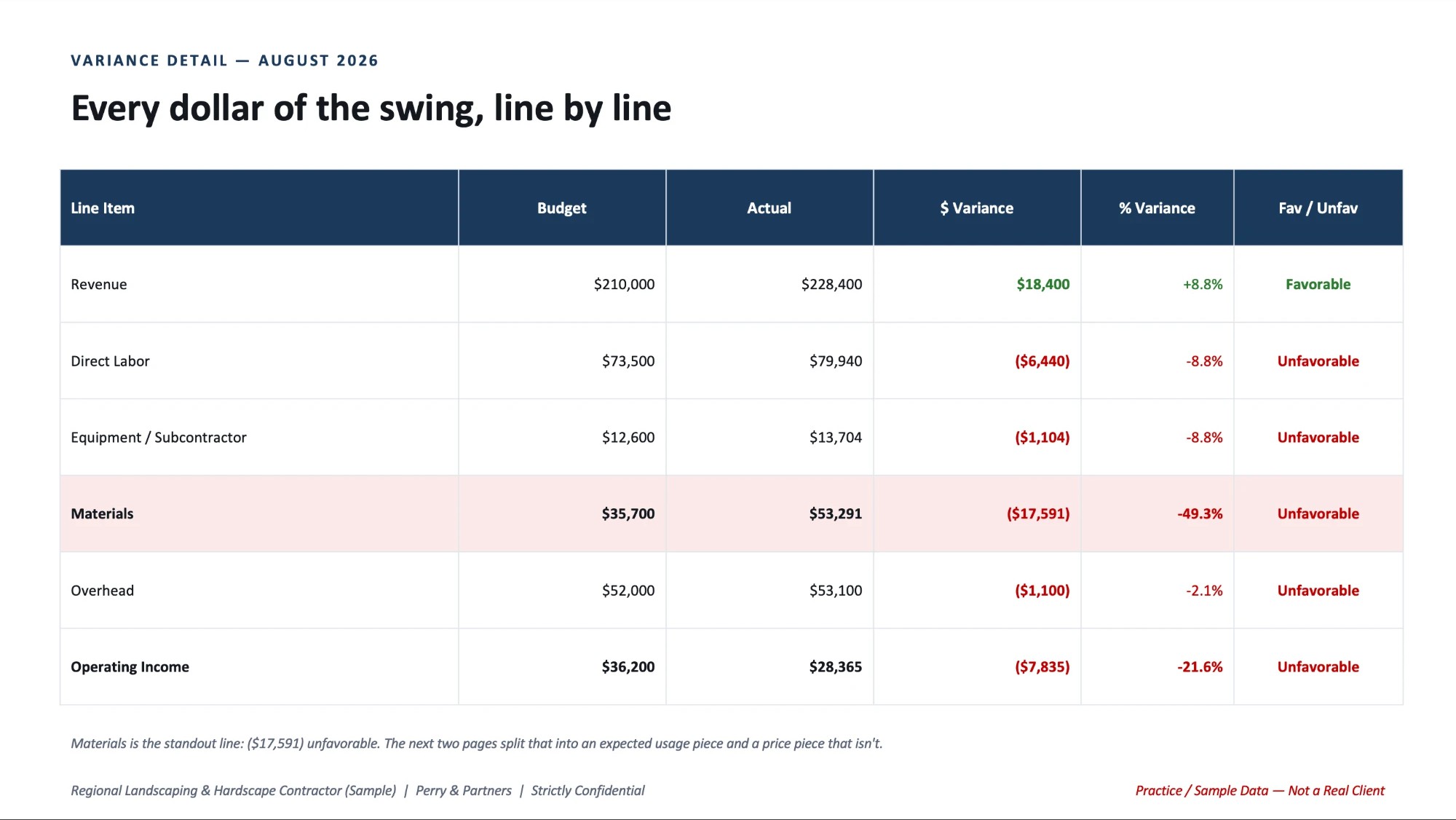
Sales were strong. Revenue came in $18,400 over budget. But operating income still missed by $7,835. A good month on the top line was hiding a problem underneath.
What the review found
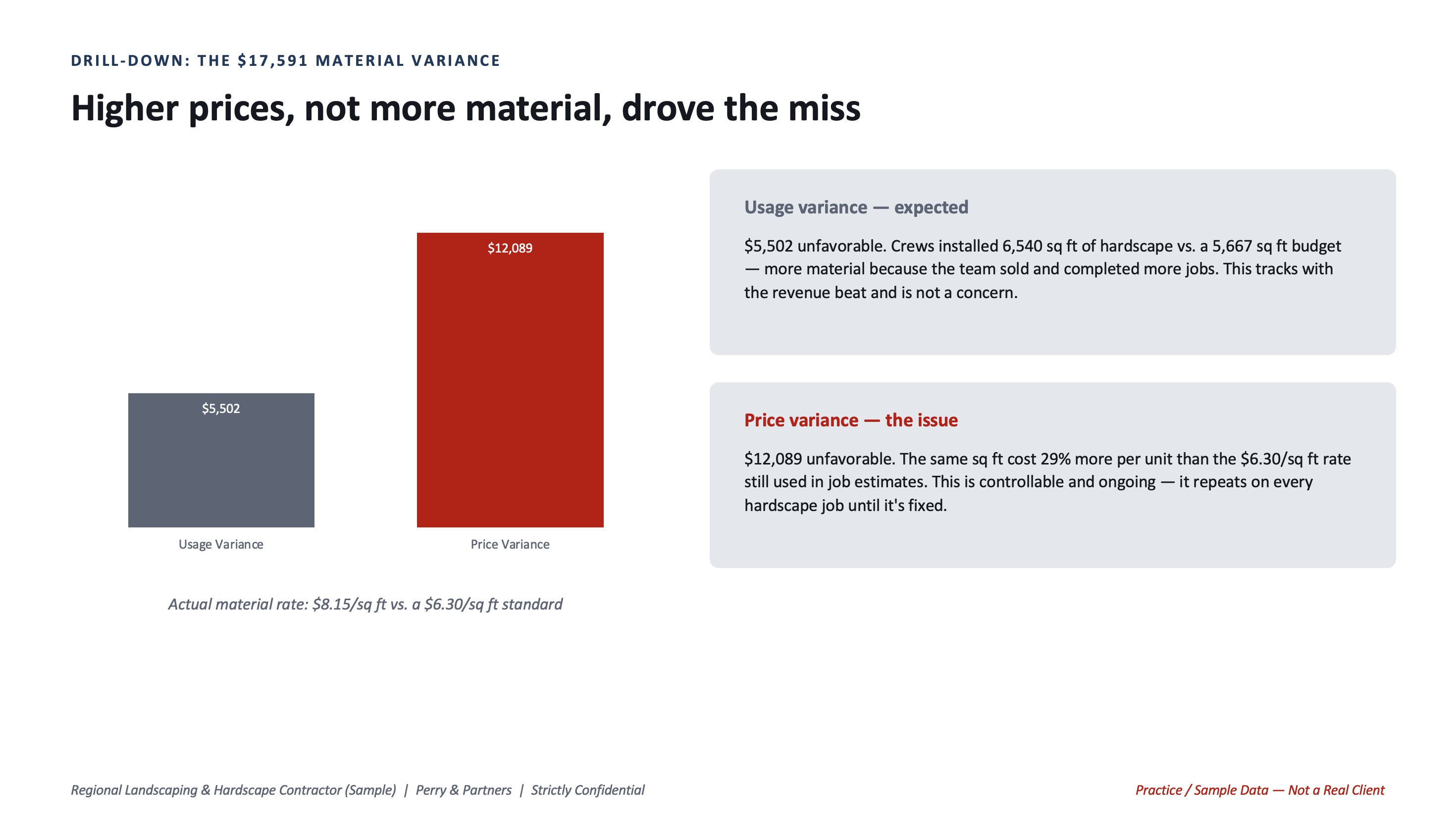
Materials ran $17,591 over budget. We split that into two parts:
- Usage ($5,502): crews installed more square footage because they sold more work. Expected, and not a concern.
- Price ($12,089): the same square foot cost 29% more than the $6.30 rate still used in job estimates. A supplier had raised prices in June, and the estimating template was never updated.
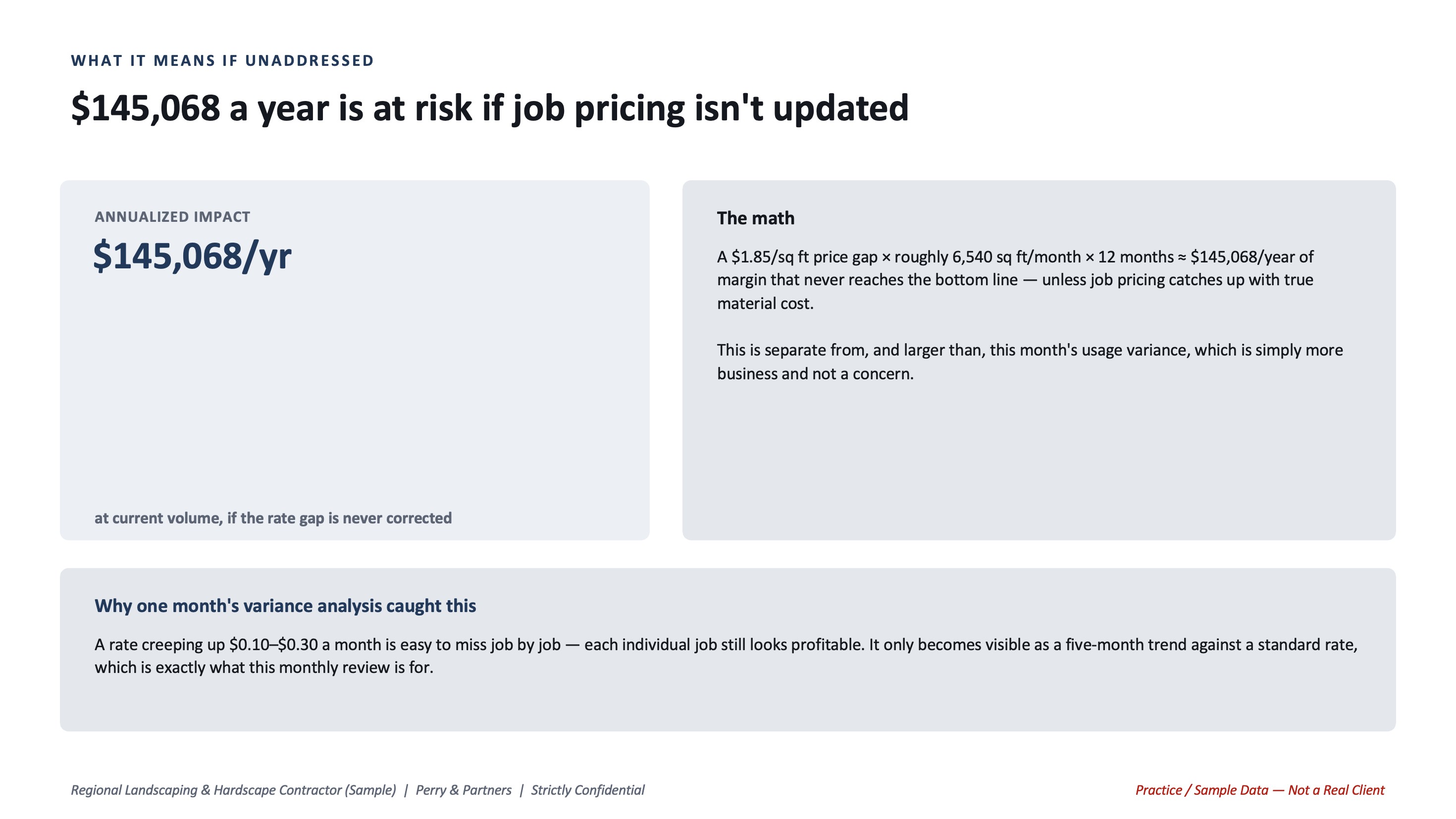
That gap repeats on every hardscape job until it's fixed. At current volume it works out to about $145,000 a year in margin that never reaches the bottom line.
Why a monthly review caught it
A cost creeping up a little each month is easy to miss job by job, because each job still looks profitable. It only shows up as a trend against a standard rate, which is exactly what a monthly variance review is for.
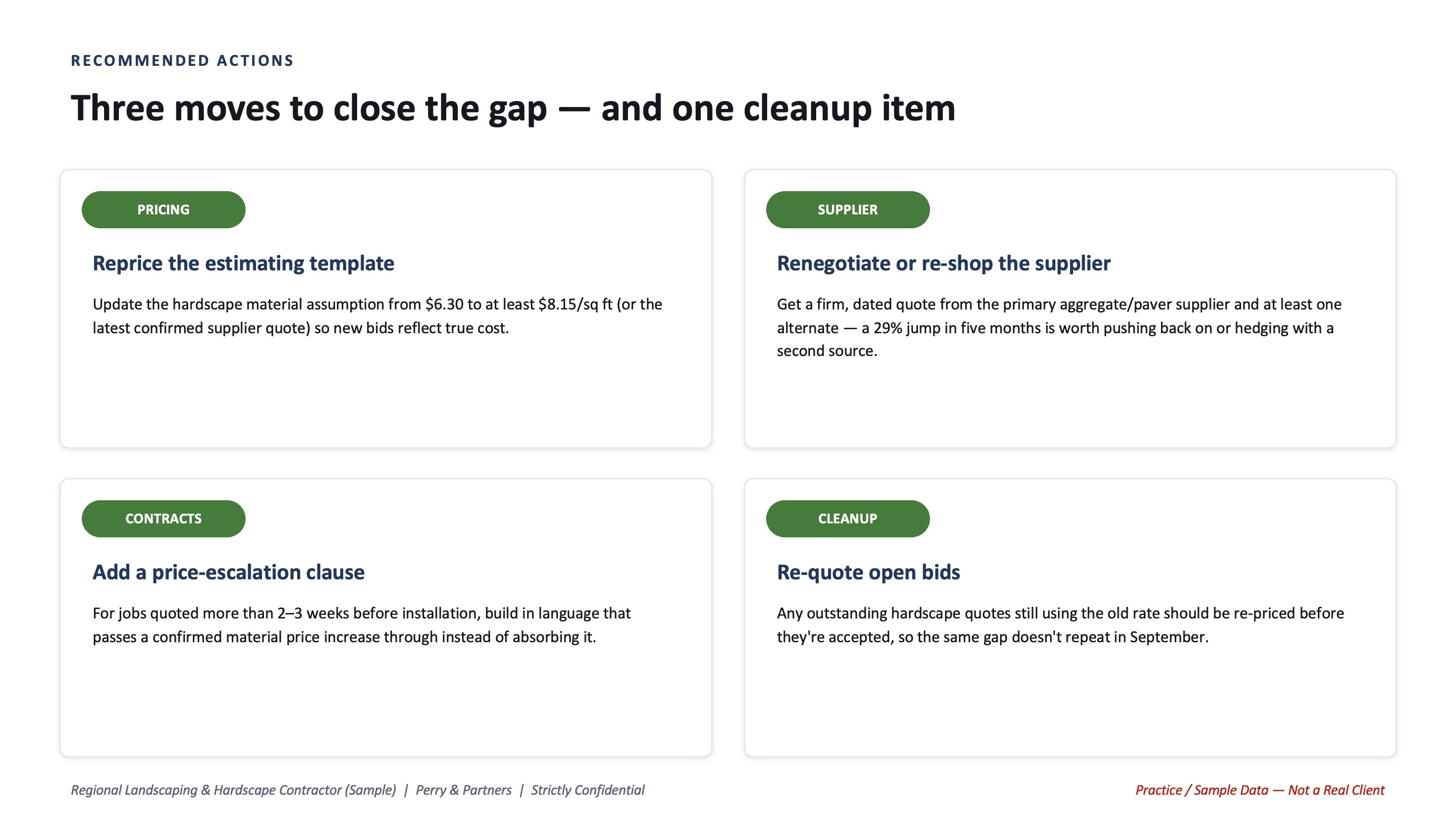
Recommended actions
- Reprice the estimating template to the current material cost.
- Get a firm, dated quote from the main supplier and at least one alternate.
- Add a price‑escalation clause for jobs quoted weeks before installation.
- Re‑quote open bids still using the old rate.