Illustrative example. This is a practice engagement built on sample data to show how we work. It is not a real client, and all figures are illustrative.
The business
A regional HVAC contractor doing about $2.5 million a year across four revenue lines, residential and commercial. It buys cooling and heating equipment ahead of each season, so cash dips hardest right when the pre‑buy lands and that season's revenue hasn't caught up yet. It carries a fleet loan on its service vans and a $200,000 revolving line of credit.
The question
The owner had never modeled whether a bad stretch could actually push cash below the bank's covenant floor. The question was simple: over the next 12 months, how low does cash get, when, and what happens if the season disappoints?
What we built
- A 12‑month forecast (September through August) built from the company's history and seasonal pattern.
- Bear, base, and bull cases, each on its own structurally identical tab.
- Automatic checks against the owner's $50,000 internal cash target and the bank's $35,000 minimum cash covenant and line‑of‑credit utilization cap.
- A dashboard where every figure and chart is linked live, so changing one assumption updates everything with no rebuild.
What it showed
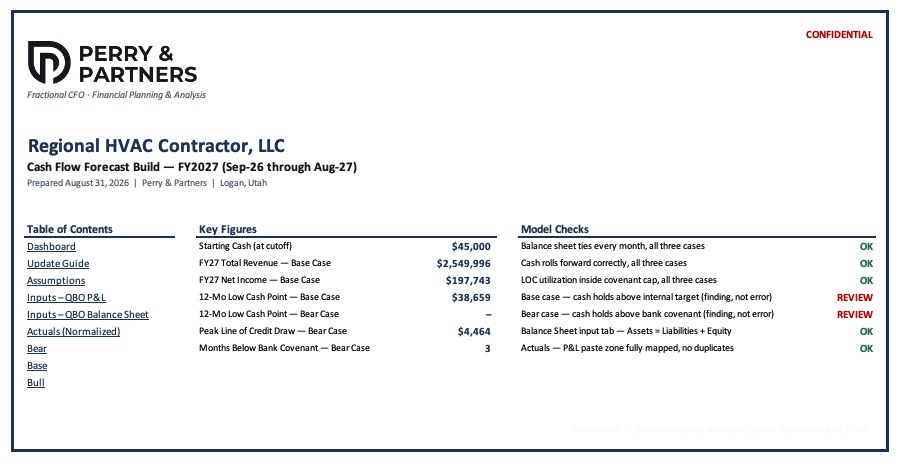
$2.55M
Base‑case revenue, FY27
$197,743
Base‑case net income
$38,659
Base‑case low point, April
3 months
Bear case below the bank's covenant floor
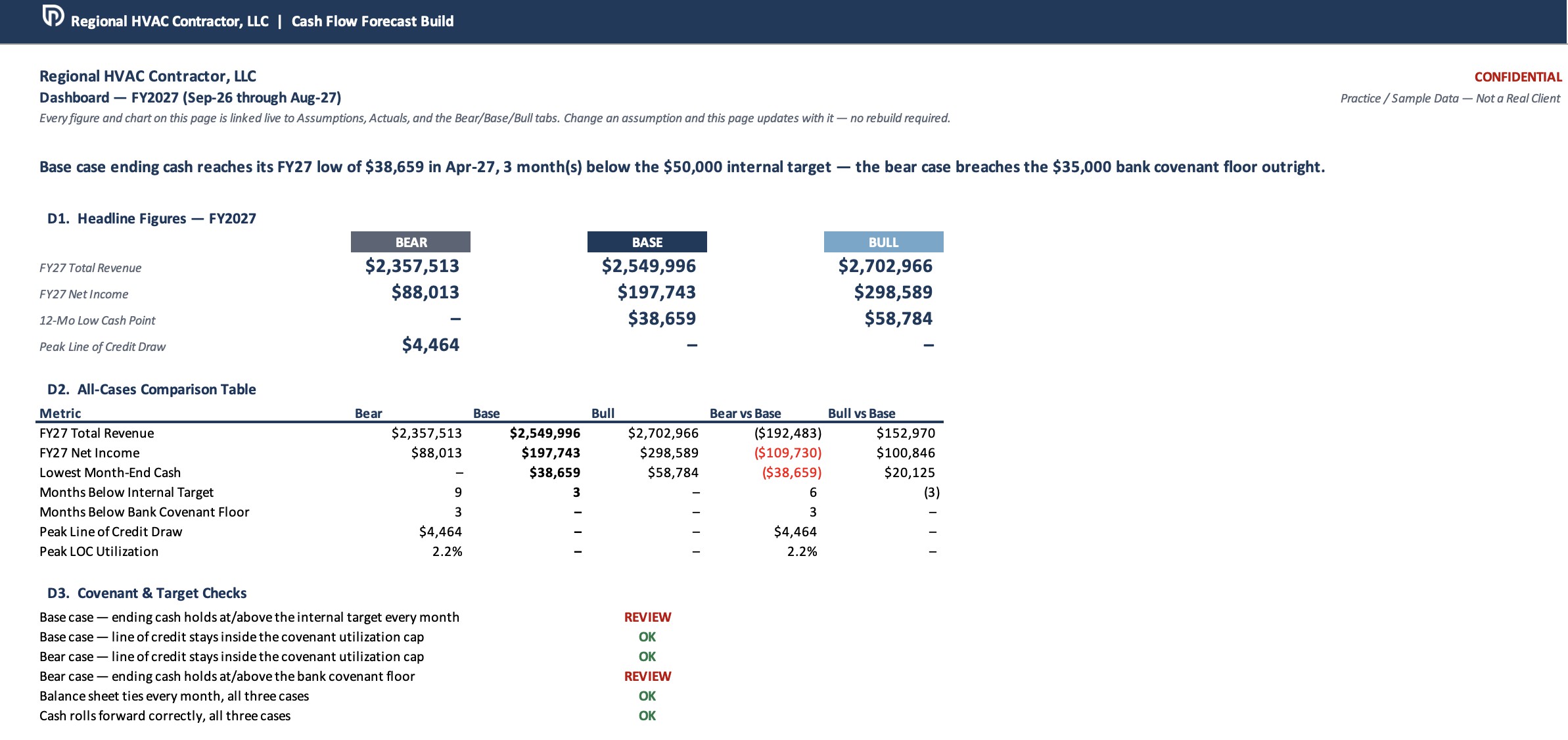
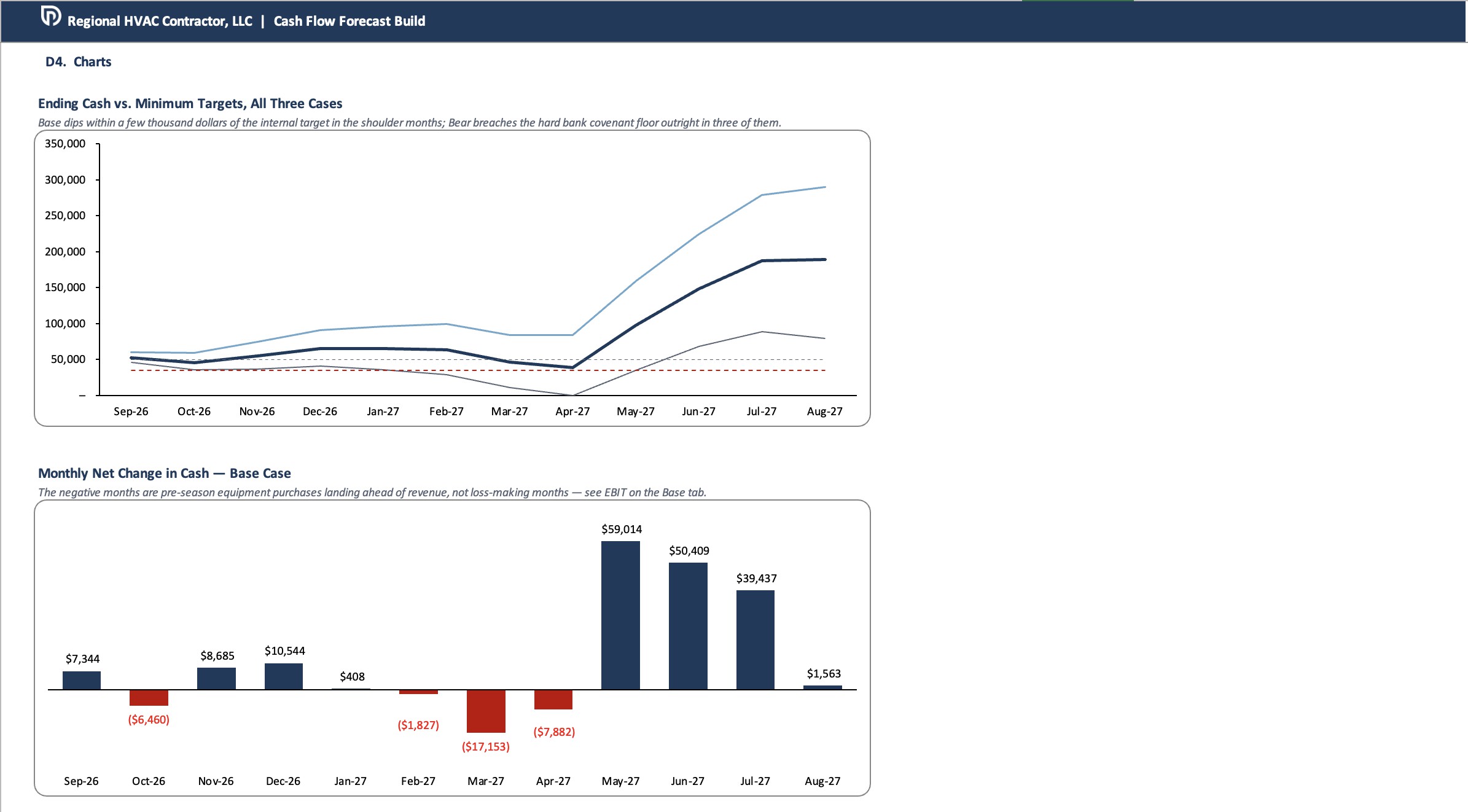
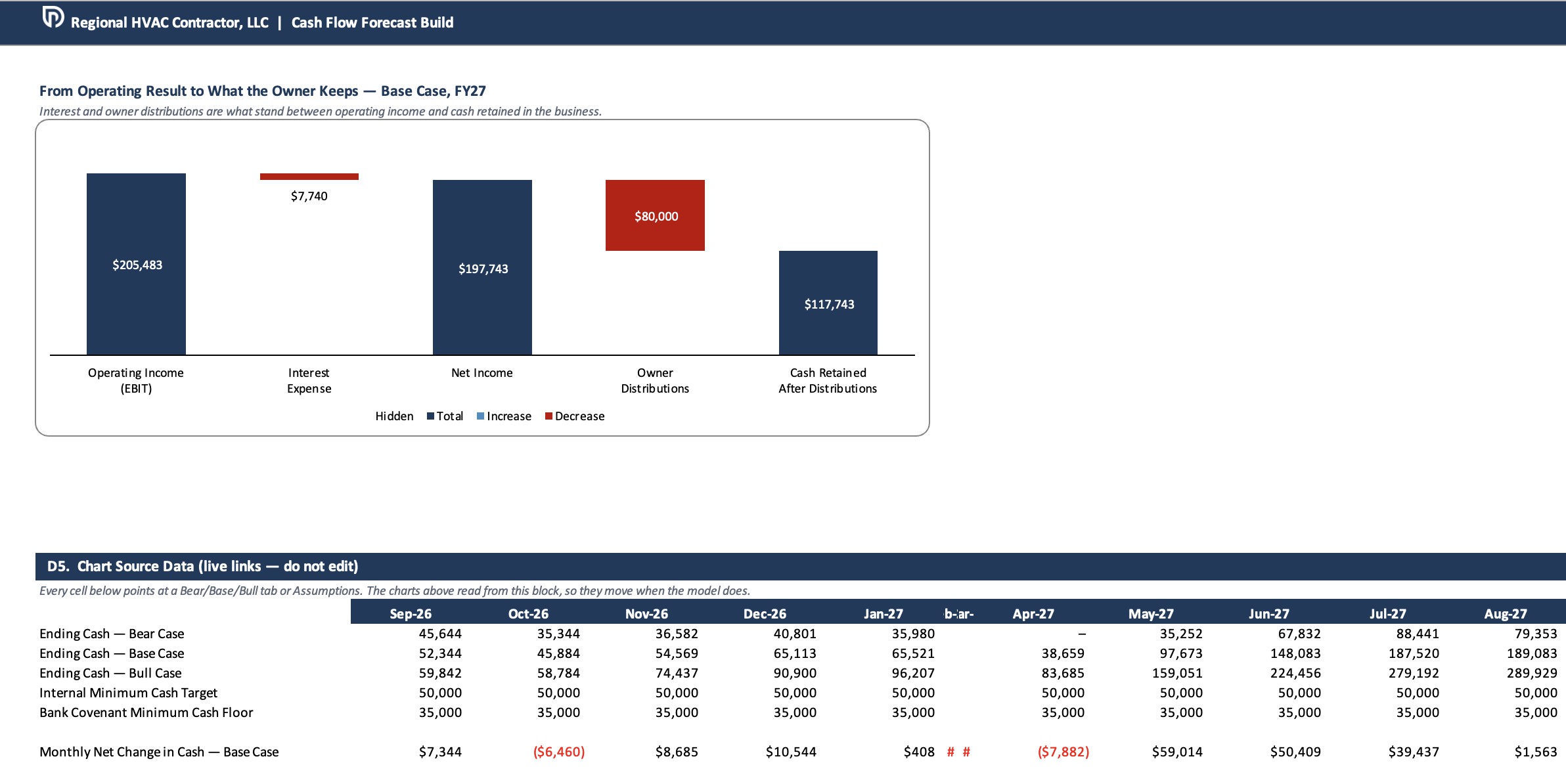
The business is profitable in every case, but profit isn't the risk. In the base case, ending cash dips below the owner's $50,000 target for three months, bottoming out at $38,659 in April. In the bear case, cash falls below the bank's $35,000 covenant floor for three months. That's a conversation to have with the bank before it happens, not after.
What the owner can do with it
- Time the equipment buy. Splitting the pre‑season order or negotiating longer supplier terms softens the dip.
- Watch one number. Month‑end cash against the $50,000 target is the early warning, well before the covenant line.
- Size big decisions against the bear case. Anything that adds debt service, like a second install crew, should be tested where the cushion is thinnest.